For a long time, a proper event meant a printed card. Today most invitations are read on a phone anyway, usually in WhatsApp. So which should you use? The honest answer: it depends on the event, and often the best choice is both.
What printed cards do well
- They feel special. A card in the hand says this event matters, especially for weddings and milestone birthdays.
- They suit older guests who may not open links.
- They're keepsakes. People put them on the fridge.
But they cost money to print and post, take days to arrive, and can't tell you who's coming.
What digital invitations do better
Replies in one tap
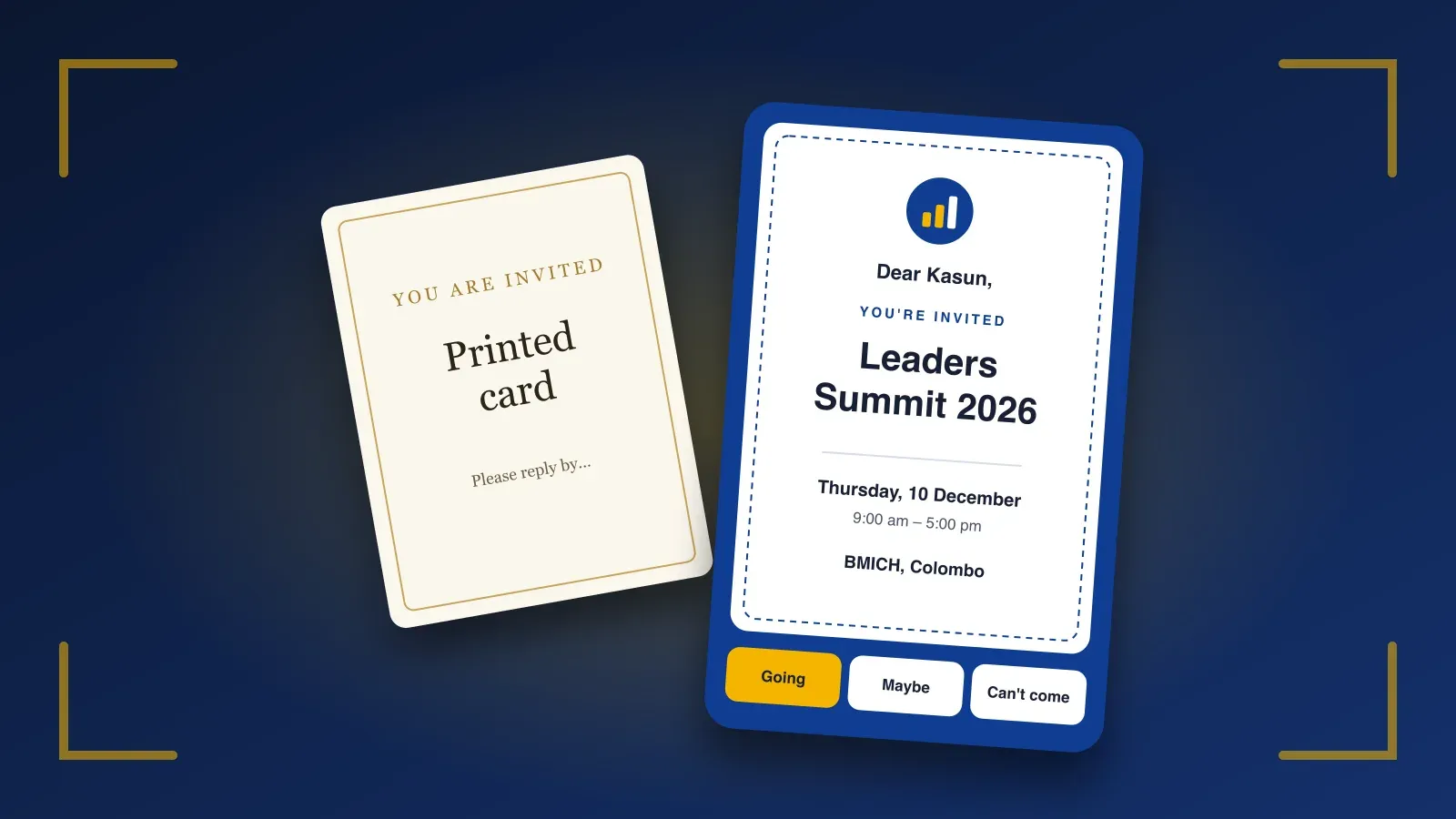
The biggest difference is replies. With a digital invitation, guests tap Going, Maybe or Can't come, and you see the totals as they arrive. No chasing people for answers a week before.
Changes reach everyone
Venue moved? Time changed? Edit the invitation and everyone sees the update when they open the link. A printed card can't be corrected.
Reminders without the awkwardness
Remind the guests who haven't replied with one tap, instead of messaging each one.
Calendar and map built in
Guests add the event to their calendar and open the venue on the map straight from the invitation, so fewer people get lost or forget.
Cost
A digital invitation costs nothing to send, whether you invite twenty people or two hundred.
Personal links make it feel personal
The usual worry about digital invitations is that they feel generic. Personal guest links fix that: each guest gets their own link that greets them by name ("Dear Kasun,"), and you can see who has opened theirs.
When to use which
- Conference, launch or AGM: digital.
- School sports day or prize day: digital.
- Birthday or anniversary dinner: digital, with a card for close family.
- Wedding: both, printed for elders and digital for everyone else.
Try it
On Framezi, every campaign can have an invitation with RSVP, sent on WhatsApp, with a photo frame for guests to share on the day. Create your invitation free, with no app or sign-up for your guests.